
Amber Vials, Clear Glass, and the Reality of NAD+ Packaging: What Buyers Need to Know
In this article
- The Psychology of Packaging: Why Amber Glass Became the Industry Standard
- Light Exposure vs. Glass Color: What the Science Actually Dictates
- Moving Beyond Visual Inspection: The Limits of Judging a Vial by Its Cover
- Best Practices for Procurement and Quality Verification
- Conclusion: Prioritizing Substance Over Packaging
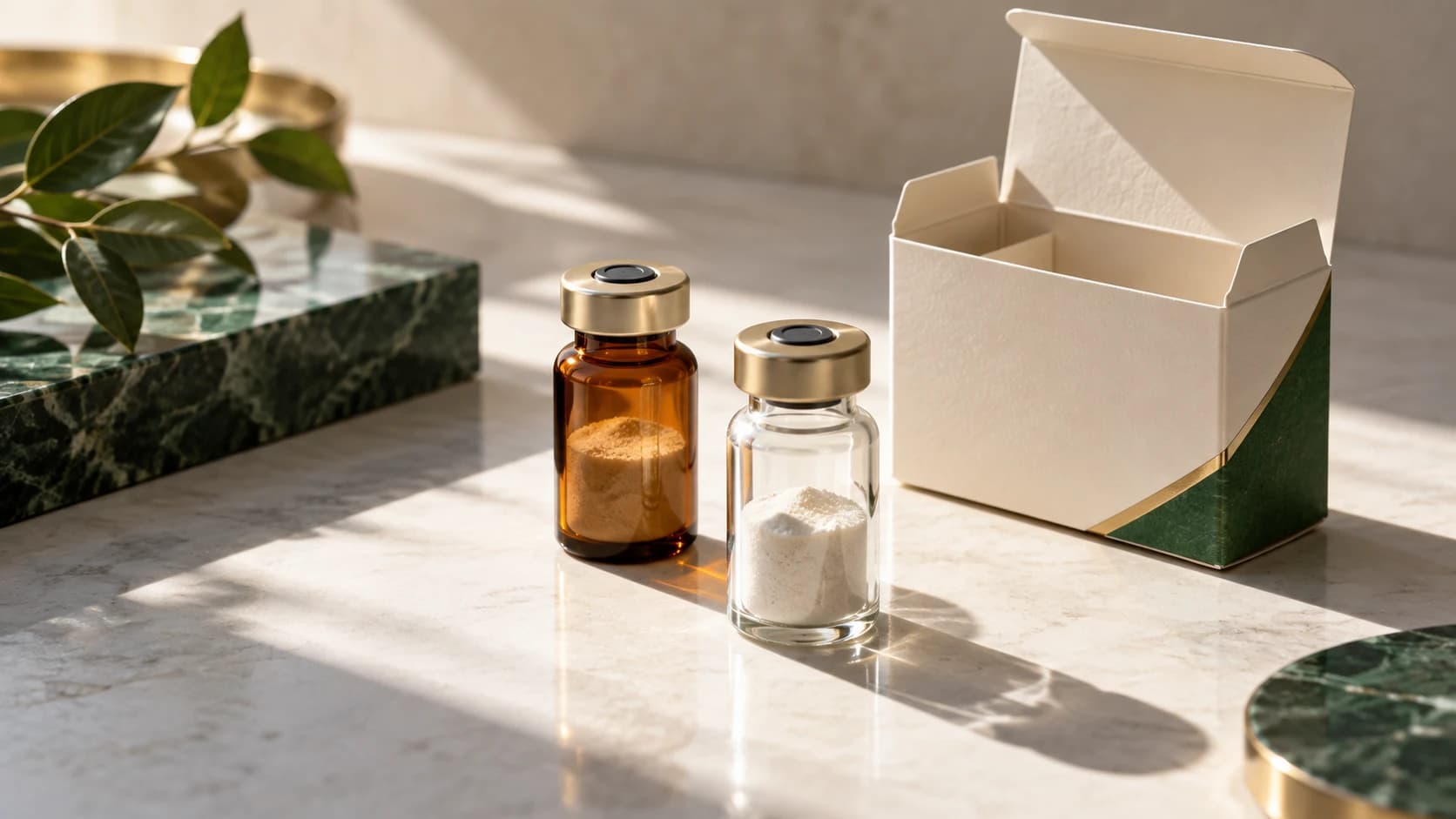
When ordering research-grade peptides and biochemical compounds, little visual details can trigger an immediate wave of skepticism. Recently, a discussion on Reddit’s peptide community caught the attention of procurement managers, clinical researchers, and individual buyers alike. A user raised a common concern after receiving their shipment: "It came in a normal 3ml vial. Before this I always received it in amber bottles. Is this suspicious? Any one received in a clear bottle before?"
For clinics, aesthetic practices, independent researchers, and secondary resellers, packaging discrepancies often spark unnecessary panic. Is a clear glass vial an automatic indicator of poor quality, sub-potent formulation, or outright counterfeit production? Or is the fixation on amber glass a misunderstanding of how laboratory compounds are stabilized, stored, and shipped?
Examining the intersection of container science, actual degradation triggers, and analytical verification provides clarity for professionals who rely on uncompromising material integrity.
The Psychology of Packaging: Why Amber Glass Became the Industry Standard
In the pharmaceutical and chemical supply sectors, amber (brown) glass has long been the default visual shorthand for quality and protection. Historically, amber glass is manufactured to absorb wavelengths of light in the ultraviolet (UV) and blue spectral regions—typically between 300 nm and 500 nm—which are known to catalyze photochemical degradation in sensitive organic molecules.
Because of this well-established association, buyers across medical, aesthetic, and academic fields have come to expect amber vials as a baseline quality marker. When a shipment arrives in a transparent, clear glass vial, the immediate psychological reaction is often doubt.
However, packaging selection is driven by a complex matrix of supply chain variables, specific formulation profiles, and intended storage timelines. Assuming that clear glass equates to inferior quality overlooks the actual physics and chemistry of compound stability.
Light Exposure vs. Glass Color: What the Science Actually Dictates
While UV radiation can indeed degrade certain light-sensitive biomolecules, evaluating a product solely on the color of its primary container is fundamentally flawed. Several critical factors dictate whether light exposure poses a genuine threat to a chemical compound:
- Duration and Intensity of Exposure: Laboratory materials stored in controlled distribution channels spend the vast majority of their lifecycle inside secondary packaging, opaque shipping boxes, or dark storage freezers. Transient exposure to ambient indoor lighting during transit or unpacking rarely matches the sustained solar irradiation required to induce rapid photolysis.
- Formulation State: Lyophilized (freeze-dried) powder forms of compounds often exhibit significantly different stability profiles compared to aqueous solutions. Solid-state peptides and coenzymes packaged under a controlled inert atmosphere (such as nitrogen purging) are far less susceptible to ambient environmental factors than liquid formulations.
- True Environmental Variables: Temperature control, moisture barriers, and seal integrity typically play a much larger role in maintaining compound stability than the tint of the outer vial.
As many experienced practitioners and technical commentators note in community discussions, actual environmental light management—such as storing vials in dark, temperature-monitored environments—often outweighs the passive protection offered by a tinted piece of glass. Concluding that a clear vial signals a compromised product is an oversimplification that ignores analytical reality.
Moving Beyond Visual Inspection: The Limits of Judging a Vial by Its Cover
In specialized procurement, visual heuristics—such as liquid color, clarity, bubbling, or vial tint—are frequently used for rapid initial checks, but they should never substitute for formal verification.
Relying on packaging aesthetics to authenticate high-purity research materials introduces significant risk. A counterfeit product can easily be packaged in an amber vial with professional-grade labeling, while a legitimate, analytically verified compound might occasionally utilize clear glass due to manufacturing batch specifications, regulatory container availability, or specific packaging formats.
For clinics, research labs, and institutional buyers, authenticating a compound requires looking past the exterior packaging. True quality assurance relies on transparent documentation and empirical testing rather than circumstantial packaging cues.
Best Practices for Procurement and Quality Verification
To eliminate guesswork and protect research integrity, professional buyers and independent researchers should adopt a rigorous, multi-step verification protocol:
- Insist on Batch-Specific Documentation: Never rely on visual inspection alone. Always review accompanying Certificates of Analysis (COAs) to verify purity and structural identity through established analytical methods such as HPLC (High-Performance Liquid Chromatography) and Mass Spectrometry. Laboratories can cross-reference batch data directly at dedicated verification portals, such as the Olvipep COA Verification Page.
- Evaluate Storage Parameters Upon Arrival: Assess thermal management during transit, seal integrity, and reconstitution guidelines rather than fixating on secondary container color.
- Establish Direct Institutional Communication: When sourcing sensitive raw materials for specialized applications, work directly with reliable suppliers who maintain transparent catalog standards. Researchers can explore technical specifications directly via the Olvipep NAD+ Product Page or review broader biochemical frameworks at the Olvipep NAD+ Research Hub.
Conclusion: Prioritizing Substance Over Packaging
The anxiety surrounding clear versus amber packaging highlights a broader challenge in specialized procurement: the temptation to use superficial traits as shortcuts for quality control. While container color plays a role in comprehensive packaging design, it is never a definitive metric for product authenticity, potency, or degradation rate.
For clinical purchasers, researchers, and discerning buyers navigating the peptide market, clarity comes from data, not glass color. By prioritizing verifiable analytical documentation and establishing transparent supply lines, professionals can ensure that their material inputs meet the exact standards required for rigorous scientific work.
To review technical documentation, examine analytical verification protocols, or discuss institutional procurement requirements, visit the Olvipep Request a Quote Portal.