
NAD+ Arriving Bubbly or Crystallized? How to Inspect It vs. White Peptide Pucks
In this article
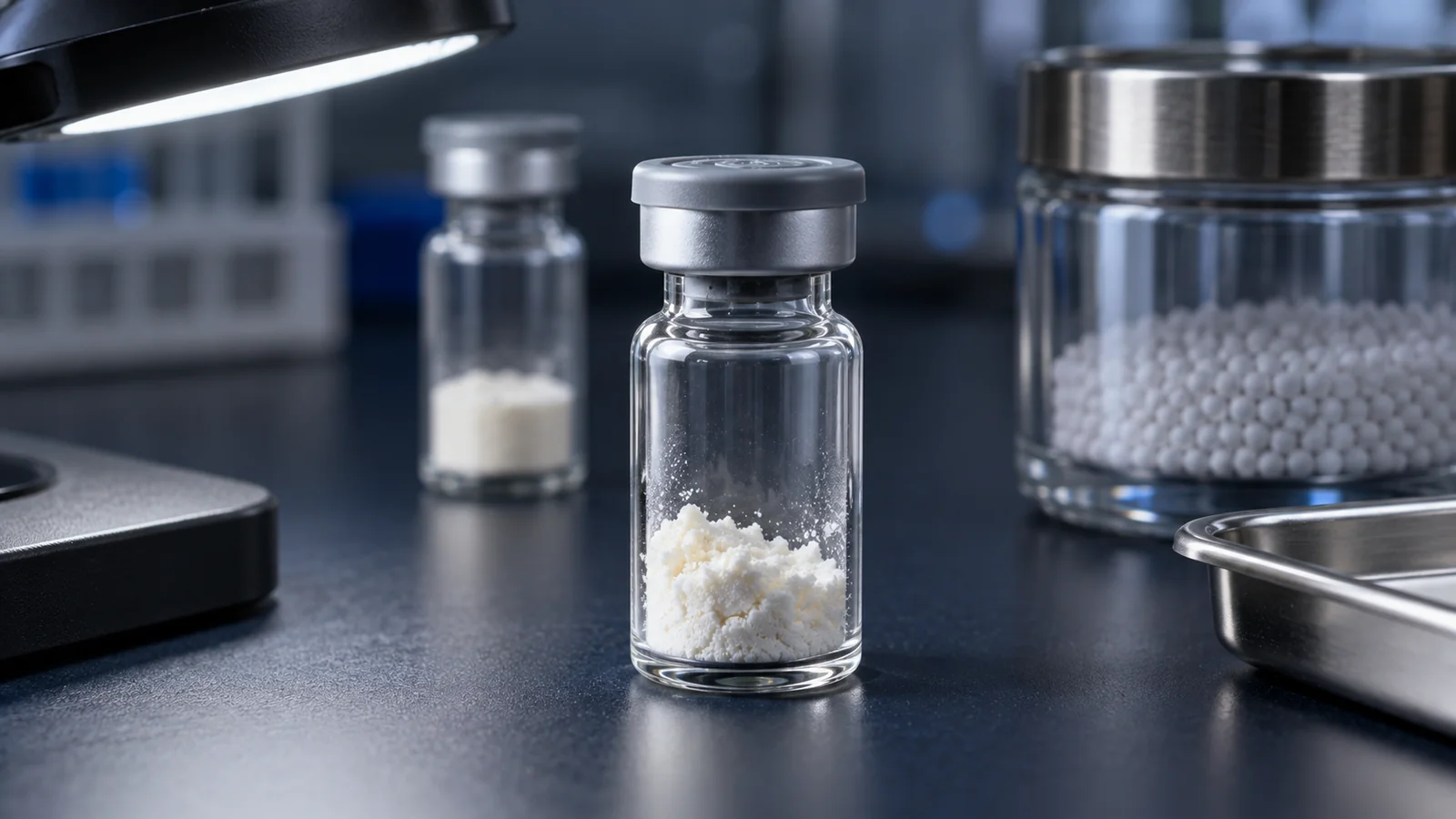
If you routinely handle lyophilized (freeze-dried) products, you are likely used to a specific aesthetic: the pristine, solid white "puck" at the bottom of the vial. However, when receiving shipments of NAD+ (Nicotinamide Adenine Dinucleotide), buyers often encounter a completely different physical appearance.
In recent discussions across biohacking communities and research forums—including a recent Reddit thread where users described their NAD+ as looking "crystallized," "bubbly," or like "melt-back"—many buyers admitted to throwing perfectly good vials away out of fear.
As a supplier of institutional peptide supply and high-purity raw APIs, Olvipep is here to clear up the confusion. What does a bubbly or crystallized appearance actually mean? How does NAD+ differ from typical peptides, and more importantly, what should you really be looking for during your intake inspection?
Why NAD+ Looks Different: The Coenzyme vs. Peptide Difference
To understand the visual differences, we first have to recognize that NAD+ is not a peptide.
Peptides like Tirzepatide, Retatrutide, or HGH Fragment 176-191 are chains of amino acids. During the manufacturing process, they are often freeze-dried with excipients or bulking agents (such as mannitol) that naturally form a structurally sound, bright white cake or "puck."
NAD+, on the other hand, is a naturally occurring coenzyme. Its physicochemical properties during the lyophilization process are drastically different:
- Hygroscopic Nature: NAD+ is highly sensitive to moisture.
- Lack of Bulking Agents: High-purity NAD+ is often lyophilized without the heavy bulking agents used in peptides, meaning it lacks the "scaffolding" required to form a perfect puck.
- The "Melt-Back" Phenomenon: During freeze-drying, the distinct molecular structure of NAD+ often collapses on itself. This results in a glassy, crystallized, or bubbly/web-like appearance clinging to the bottom or sides of the vial.
This crystallized or bubbly look is simply a reflection of the molecule's physical behavior under vacuum and freezing temperatures.
The Inspection Trap: What Appearance Can and Cannot Tell You
When receiving a batch of NAD+ (or any API), visual inspection is only the first step. It is crucial to understand the strict limitations of what your eyes can verify.
What Visual Inspection Can Confirm:
- Physical Integrity: Ensuring the glass vial is uncracked and the rubber stopper/crimp seal is intact and untampered with.
- Vacuum Presence: Many (though not all) lyophilized vials will have a vacuum that pulls diluent in rapidly.
- Reconstitution Clarity: When reconstituted with bacteriostatic water, the solution should dissolve entirely and become completely clear, with no floating particulate matter.
What Visual Inspection Cannot Confirm (The Critical Correction):
Many buyers mistakenly believe that an ugly, bubbly cake means the product is degraded, or conversely, that a perfect white puck means the product is pure. This is scientifically false.
- You cannot visually verify potency or purity. A vial with a bubbly, crystallized NAD+ cake might test at 99%+ purity, while a visually perfect peptide puck from a low-tier supplier might contain heavy impurities.
- You cannot visually detect degradation. You cannot look at a lyophilized cake and determine if the active pharmaceutical ingredient has degraded due to heat or time.
- You cannot visually confirm sterility. Reconstitution clarity and vial vacuum tell you nothing about microscopic bacterial or endotoxin contamination.
Relying on the visual "melt-back" appearance to judge quality—or throwing vials away because they don't look like your usual peptides—is a fundamentally flawed approach to quality control.
How to Truly Verify Quality: Analytical Testing
If visual appearance, vacuum presence, and reconstitution clarity cannot confirm if your NAD+ is pure, potent, and safe, what can?
Third-party analytical testing.
At Olvipep, we emphasize that true quality is proven in the lab, not by the naked eye. The only way to verify that your NAD+ (or any peptide) is free of contamination and meets label claim is through high-performance liquid chromatography (HPLC) and mass spectrometry (MS).
When you source NAD+ from a reputable supplier, your acceptance criteria should focus on data:
- Review the COA: Always check the Certificate of Analysis matching your batch. You can easily Verify COA on our platform.
- Check Quality Control Standards: Ensure your supplier tests for purity, net API content, and endotoxins.
Source Institutional-Grade APIs with Olvipep
Whether you are a clinic owner, a reseller, or a researcher, transitioning from visual guesswork to data-backed procurement is vital for your success and safety.
Olvipep supplies high-purity raw APIs designed for institutional use. Explore our full range of solutions:
- Browse our complete Product Catalog.
- Interested in scaling your brand? Learn about our Wholesale & Private Label programs.
- Need specialized formulations? We offer Custom Peptide Synthesis.
Have questions about a specific batch or ready to order?
- Request a Quote for bulk pricing.
- Chat directly with our specialists via Sales Chat.
- Reach out through our Contact Page.
Stop guessing based on bubbles and crystals. Rely on institutional quality and verified data with Olvipep.